Image credit: TM Microsoft 2024-2025. ©️ Compulsion Games ULC 2024-2025
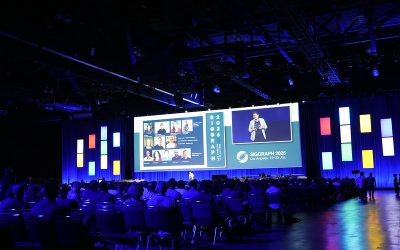
During the SIGGRAPH 2025 Production Sessions, “‘South of Midnight’: Crafting a Stop Motion Southern Gothic Game” offered a rare behind-the-scenes look at how Compulsion Games fused art direction, animation, and technology to build a handcrafted, folkloric world inspired by Southern Gothic traditions.
Here, Associate Animation Director Vincent Schneider shares how the game’s distinctive visual identity took shape and the production challenges and wins that came with pushing stylization in both gameplay and cinematics.
SIGGRAPH: At SIGGRAPH 2025, the Production Sessions program featured a stellar line up of content including your session “’South of Midnight’: Crafting a Stop Motion Southern Gothic Game”.Why did you decide to present this work at SIGGRAPH?
Vincent Schneider (VS): We thought that what we achieved with the animation on “South of Midnight”, as well as how we achieved it, was something we had not seen before. We want to see more games trying to create handcrafted looks, so it made sense to share our journey to realize our vision for this game.
We originally gave this presentation at GDC, because it is usually where this kind of thing happens. But after GDC, we got approached by SIGGRAPH as they were looking for content like ours for the Production Sessions. To be honest, I didn’t know that this kind of content existed at SIGGRAPH — I was assuming it was all white papers and tech talks! But it’s great to see that there’s also space reserved for more artistic content, and that video games are getting more of the spotlight, too.
SIGGRAPH: For those who could not attend your session or may not know about “South of Midnight”, can you tell us about this third-person immersive action-adventure game?
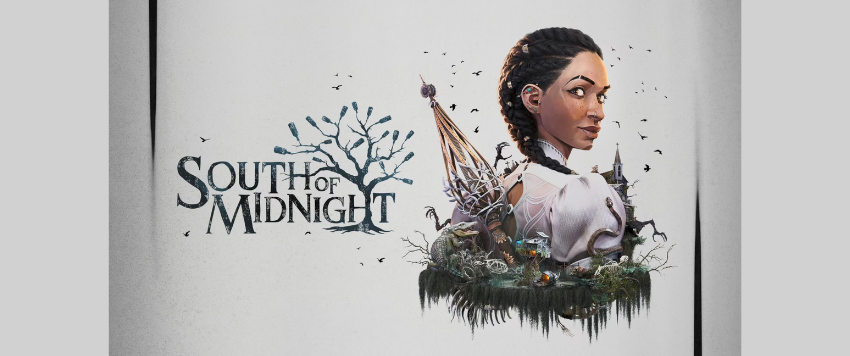
VS: “South of Midnight” is a game set in the American South that asks the question: What if the legends, myths, and creatures of the southern folklore were true? It follows Hazel, a young woman who lost her mother to a hurricane and discovers magical powers inspired by the crafts of spinning and weaving. Using these powers, Hazel searches for her mother while unraveling the histories of these mythical creatures — and her own family’s past. The themes and style are also heavily inspired by Southern Gothic classics, like “Night of the Hunter” and “A Streetcar Named Desire”. We like to refer to the game as a dark folktale set in the Deep South, where whimsical and mature themes intertwine.
It was well received when it launched last year, and it has already received a bunch of awards.
SIGGRAPH: Your talk went in depth into how the combination of art and technology brought this stop motion Southern Gothic world to life. Tell us about this style choice for the game. How did your team ultimately end up pursuing this direction?
VS: The game being set in a fable-like world brought us to push the visual stylization of the world and the characters. It felt natural to go in a direction inspired by handcrafted stop-motion films. The whole thing had to feel like the retelling of a dark modern folktale. We tried to push this on several fronts: The environments and characters have textures and proportions that are meant to make them look like handmade maquettes and puppets; the chapters open and close with an animated storybook with block-print-like illustrations along with a mysterious narrator with a Cajun accent; the stories of the different creatures are narrated with songs.
The animation style and the stop-motion treatment on the characters during gameplay and cinematics are completing the picture. It’s our way of saying: This is a folk story we’re retelling, and it’s being told by a bunch of human beings who put a lot of care into every aspect of this game. It also fits particularly well with some of the creepier creatures in our world, on which we could push the stylization further than on more mundane characters. Some people are more sensitive to it than others, but stop-motion has this way of showing you something that is moving, even though it shouldn’t move. That dichotomy can be very powerful to create an uneasy feeling.
SIGGRAPH: Compulsion Games is also the developer of other visually appealing games like “Contrast” and “We Happy Few”. Did you draw inspiration from those titles when developing the visual approach for “South of Midnight”?
VS: Those three games share an art director, Whitney Clayton, so I don’t know if we can talk about drawing inspiration — I’d rather say that there’s continuity in all of them. The handcrafted-ness and stylization were already part of the art direction of “Contrast” and “We Happy Few”. With every game we have been trying to improve on the last one, and we were lucky enough to be able to do that, thanks to having more people and more money. To be honest, until “South of Midnight”, the animation direction itself wasn’t that well defined. With this one, we had the time, the intentions, and the means to really ask ourselves where we wanted to go, and I think it shows.
SIGGRAPH: Did your team run into any roadblocks during the design of this game? If so, what were those roadblocks and how did your team overcome them?
VS: There have been a bunch of challenges, as in most productions!
One of the ways we wanted to explore evoking stop-motion in gameplay was playing with the framerate. This is a very touchy subject in a field where actual low framerate can very negatively impact the player experience. It had to feel intentional — noticeable but not disruptive. It took some trial and error to find the right settings for each character and special cases. Especially since when it was a bit too heavy handed, it induced some motion sickness in some people. The team did a great job optimizing the game, and it runs great on consoles. I think that superb stable 60fps framerate helps emphasize the stop-motion treatment by making it look clear and intentional.
Another challenge, and that’s something we touched on during the session, was that we ended up having about an hour and a half of cinematic animation. We worked with an outsource partner, Agora, who was able to scale rapidly and build a team of great animators. The original plan was to push the stop-motion look on characters during those moments where you see them up close. While the treatment was procedural for the gameplay, the stylization in cutscenes had to be done by hand. This is what we had done in the announcement trailer with the guitar playing guy. There was no time to rapidly ramp up so many animators to master that way of animating, and unfortunately there were too many scenes, so we had to pivot and have a much lighter treatment on the characters’ bodies, though we kept a pretty strong stylization on their faces.
Finally, another thing that was tough was keeping the character stylization consistent. We had a lot of characters, and the character team was fairly small. This meant outsourcing some character designs and models. As with a lot of things, it is very easy to slide back toward realism and more mainstream-looking art when the time gets short. Overall, we had great-looking characters, and it was a ton of fun to give them life.
As an extra tidbit, on 31 March 2026, “South of Midnight” just released on PS5 and Switch2. If you missed it last year, now’s the time to check it out!
Catch more intriguing stories behind the scenes of games production and more at SIGGRAPH 2026 Production Sessions. Register now.
Vincent Schneider has been with Compulsion Games for the last 10 years. After working on We Happy Few, he was the Associate Animation Director on South of Midnight. Before that, he has been working as an animator and a generalist artist in games and TV since about 2007. Passionate about the artistic and technical sides of things, he enjoys being involved in many aspects of game development.