Asset Creation Process
Image credit: Anthony Giacchino and Fall 2024 students
What happens when a classroom becomes a shared space for experimentation rather than instruction? In this SIGGRAPH Educator’s Forum feature, faculty member Anthony Giacchino and technology advisor Rochele Gloor reflect on their course “AI & Filmmaking: A Sandbox for Generative AI Experimentation in Computer Graphics Education.” Instead of following a fixed curriculum, the course invites students to explore collaboratively evolving tools, grounding their discoveries in historical research and real creative challenges.
SIGGRAPH: What motivated the creation of this course as a “sandbox” for generative AI experimentation, and how does it differ from a traditional classroom approach?
Anthony Giacchino (AG): The course began with the understanding that neither I nor most of the students were coming in as experts in generative AI or really with any deep understanding of it. That actually felt liberating! Instead of a 100% top-down class, it felt more like a shared sandbox where we could explore these tools together, test their limits, and figure out what they were actually good for in a filmmaking context. The difference was that the class was built around discovery and experimentation, but always in service of a real creative and historical problem.
Rochele Gloor (RG): There were many reasons that motivated us to create the course as a sandbox. One of the main motivations was that the sandbox model allowed us to quickly adapt to generative AI tools, knowing that the technology was evolving too fast for a fixed curriculum. The AI & Filmmaking: A Critical Exploration course was first offered in fall 2024. At that time, there was no similar class or enough data to provide a clear course structure since these tools and their capabilities for film or video generation were new. In addition, designing the class as a sandbox environment provided the grounds for experiential learning as a group, which was an important aspect. The students worked collaboratively, discussing their findings in class, sharing their assets in a Google folder for curation, and assessing together what worked and what did not. Another point is the fact that the instructor became a facilitator, and the students were acting like researchers doing experiments, which was satisfying. Learning through iteration and exploration is a recursive process that worked well with generative AI.

“The Good Italian,” Film Still
Image credit: Anthony Giacchino and Fall 2024 students
SIGGRAPH: How did students balance using generative AI tools with more traditional filmmaking and animation techniques throughout the project?
AG: We began with history, not software. For the first two weeks, we did not even touch computers. We walked the streets connected to Joe Petrosino, visited locations from his cases, studied period newspaper coverage, and researched archival photographs. Only after that foundation was in place did we begin using generative tools. AI helped us extend and visualize the past, but the work still depended on traditional skills: research, design, editorial judgment, VFX, and post-production.
It was never AI replacing filmmaking. It was AI being folded into our filmmaking process.
Anthony Giacchino
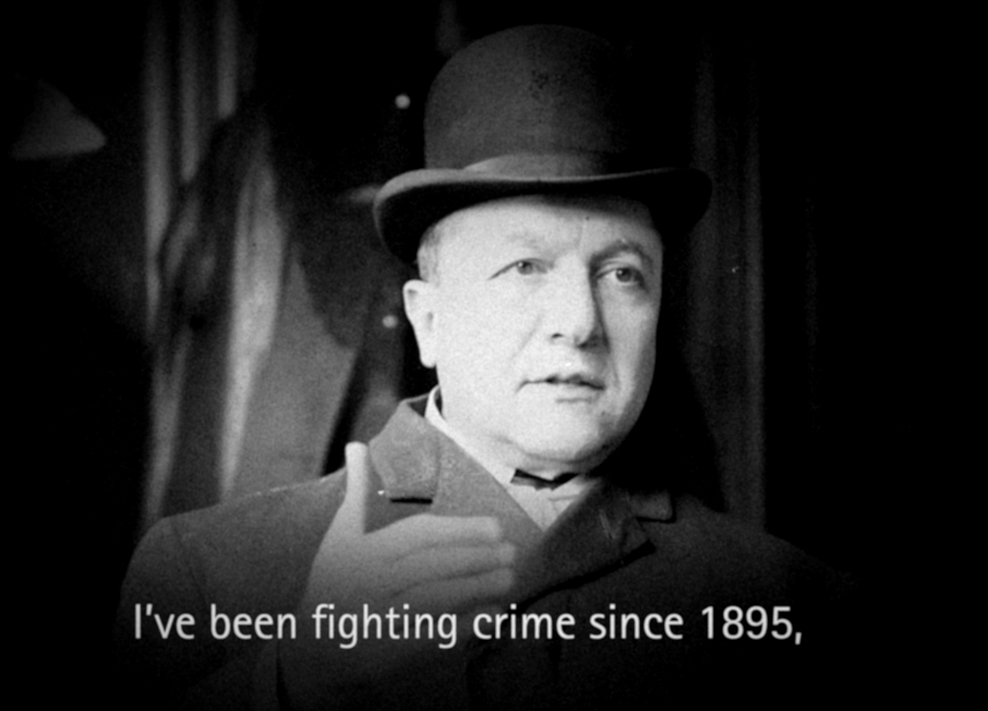
Still from the final film showing Joe Petrosino in Lip Sync Video Generation.
Image credit: Anthony Giacchino and Fall 2024 students
SIGGRAPH: The course centers on producing a silent documentary. What made that format particularly effective for exploring AI-driven storytelling?
AG: The silent film format felt right almost immediately because it matched both the historical subject and the strengths of the technology. Once we saw generated footage that looked like it could have come from Petrosino’s own era, the form made complete sense. Silent cinema let us focus on image, gesture, texture, and atmosphere rather than forcing the work into a modern mode. It gave the film a strong visual logic and made the AI-generated material feel less like imitation and more like a recovered historical form.

AI & Filmmaking Sandbox Framework for Flexibility of AI Tools Adaptation and Ethics Discussions.
Image credit: Rochele Gloor, 2025
SIGGRAPH: What did you and your students discover about using AI for reenacting historical events in documentary storytelling that you didn’t know before or didn’t expect?
AG: One of the biggest discoveries was that AI becomes far more interesting when it is constrained by evidence. For us, it was most powerful not when it was inventing freely, but when it was working in dialogue with archival research, real locations, and historical images. We also discovered very quickly that these tools raise serious documentary questions about transparency and trust. If you are generating the past, you have to be clear with the audience about what they are seeing and how it was made. That became just as important as the images themselves.
RG: As Anthony mentioned, it is not only important to raise questions about transparency but also to acknowledge that AI lowers the barrier to fabricating historical footage, which changes the nature of documentary production. People will be generating videos that are based on truth but are misrepresentations of the facts. During and outside of the class, there was discussion about the challenges of using this new genre of storytelling, representing a narrative from an individual perspective and its own realistic uncanny valley aesthetic. The visual representation of people and places from the early 1900s is remarkable; it is difficult to distinguish the peculiarities of AI-generated images. Understanding this is crucial from an educational perspective.
SIGGRAPH: What do you hope educators and students take away from this approach to integrating generative AI into the classroom?
AG: I hope they take away that AI works best in education when it is treated as a space for inquiry, not a shortcut. The value is not in pressing a button and getting a result. The value is in asking what these tools can contribute, where they fail, and how they interact with traditional forms of craft and authorship. I also hope educators see that, done with care, AI can be integrated into the classroom without lowering standards. In our case, research, collaboration, and transparency were central from the start.
RG: One of the questions I raised during my presentation at the Educator’s Forum remains relevant: How can we apply the learning outcomes of this class to a broader context? Through this approach, I hope educators and students recognize the importance of verifying information using primary sources and engaging with humanities-based research. As generative AI becomes more integrated into film and documentary media, the ability to critically evaluate information, understand historical and cultural context, and verify sources will become an essential skill for future filmmakers, artists, and educators. It is also important to learn new technologies and workflows and adapt to them quickly. At the same time, students must understand that AI does not replace the filmmaker or artist; human authorship, oversight, and taste (especially) remain central when working with AI-generated content.
SIGGRAPH: What advice would you give to students interested in exploring AI-driven storytelling or educators submitting similar work to the Educator’s Forum at future SIGGRAPH conferences?
AG: For students, I would say: Do not mistake prompting for authorship or filmmaking. These tools can be powerful, but they still require taste, discipline, and a real point of view. Bring your existing skills to the process and use AI as part of a larger creative method.
For educators, I would say: In my experience, the strongest results come when students have a clear problem to solve, meaningful constraints, and a reason to think critically about both process and outcome. That is what turns AI from a novelty into a serious educational tool.
RG: Advice I give to both students and faculty exploring AI-driven storytelling is to experiment with these new technologies, learn about their capabilities and limitations, and understand how to implement them into existing or new workflows and what it takes to generate AI content. Interdisciplinary collaboration or cross-field thinking is especially important when working with AI-driven storytelling. It is also important to be transparent and responsible about what you create and share.
With that, I would add that this contributes to community submissions that explore how we can evolve as humans in alignment with these systems while empowering people in positive ways, recognizing that the stories we tell can influence others.
We would like to acknowledge the students from the fall 2024 class (alphabetical order): Alexia Hartogensis, Chatrin Samanchuen, Hyeonghoo Cho, Jialai Chen, Marzena Milowska, Meina Yin, Rithvik Poddutur, Yadan Tan, Xun Hu, and Zehua Fu.
Are you interested in exploring education techniques like the ones shared here? Register for SIGGRAPH 2026 to discover even more. Secure early registration pricing through 8 May.
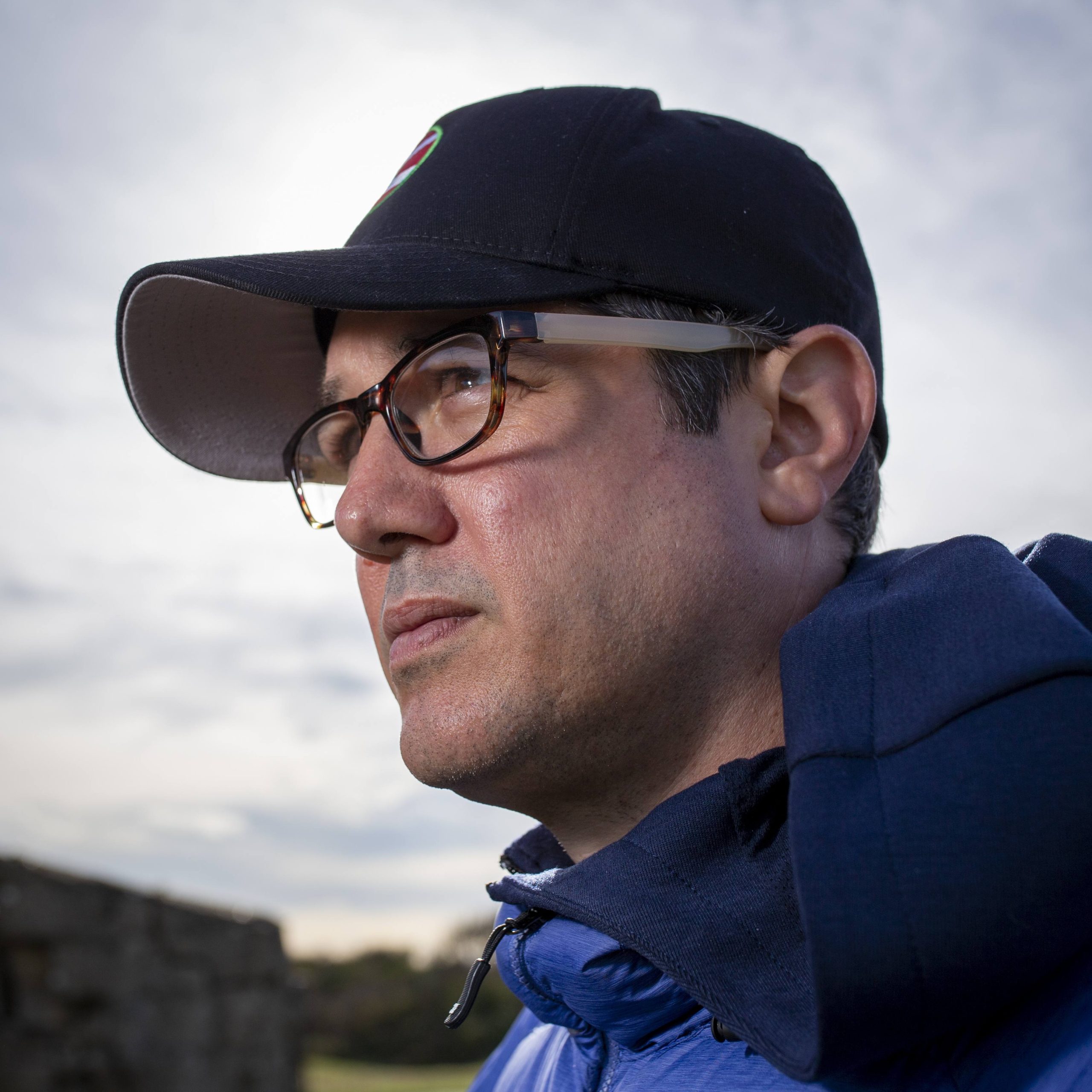
Anthony Giacchino* is the faculty member who teaches the AI & Filmmaking class. Many years ago, Anthony imagined he would become a university history professor, but a few detours along the way (all rooted in his love of history) led him to documentary film instead. His documentary Colette won the 2021 Academy Award, and his first feature, The Camden 28 (PBS/POV), was nominated for a Writers Guild of America Award. He’s directed history-driven films on the Kennedy assassination (yes, he is 100% sure Oswald acted alone), Pearl Harbor (again, no conspiracy!), and the Atlantic slave trade; along the way, there was even a Primetime Emmy. Anthony has also turned his documentary lens on Hollywood’s imagined worlds, from The Iron Giant and Mission: Impossible to Marvel’s Werewolf by Night. Anthony continues to make films and is on the MFA Computer Arts faculty of the School of Visual Arts in New York City.
*Password to portfolio is 1945

Rochele Gloor is the class’s partnership and technology advisor. She is a multidisciplinary artist from Brazil based in New York whose work explores the intersection of embodiment, contemplation, metahumanism, and human–technology interaction. She holds a BFA in Fashion Design from the Fashion Institute of Technology (NYC) and has a background in medical imaging (MRI) and computerized knitwear design. She has directed her own label as a laboratory for experimentation toward sustainable futures in fashion, winning an award as a woman-led, sustainability advocate. In 2020, she expanded her practice into digital art, embracing 3D applications and immersive technologies. She earned an MS in Creative Technologies with a focus on virtual reality and sound design, and since then has published research on aesthetics in audiovisual VR experiences, digital fashion, AI frameworks, and co-embodiment. Gloor has contributed to early generative AI advisory initiatives at the University of Illinois at Urbana-Champaign and the School of Visual Arts in New York, where she currently serves as Assistant Director for Innovation Technologies in the MFA Computer Arts program. She is also an International Advisory Board member of the VIEW Conference and a collaborator with the ACM SIGGRAPH Education Committee.