Image Credit: Rodeo FX, 2024 HBO
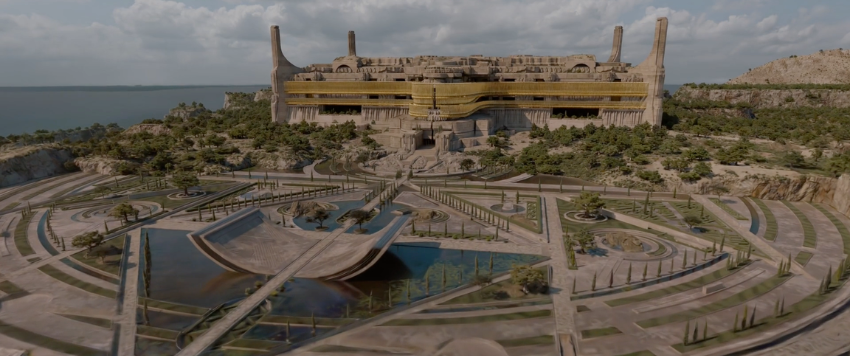
For HBO’s “Dune: Prophecy”, the team at Rodeo FX set out to push beyond the limits of traditional previsualization and layout workflows, rethinking how full CG environments could be built, explored, and presented. Focusing on the Imperial Palace, they experimented with Gaussian splat technology as a way to bridge the gap between speed and visual fidelity, enabling more immersive, real-time camera layouts without sacrificing detail. By developing a new pipeline that transforms CG data into high-quality splats and integrating tools like Houdini and MetaHumans, the team unlocked a more dynamic and collaborative approach to shot development.
In this interview, Julien Héry and Peter Nofz share how this evolving workflow reshaped their process, from early experimentation to practical application in production.
SIGGRAPH: Give us an overview of your work on “Dune: Prophecy”. What inspired your team to explore Gaussian splat technology within the previsualization and layout process?
Peter Nofz (PN): We had been messing around with capturing Nerfs and then Gaussian splats with Luma AI and loading them into Unreal and other available tools at the time. We marveled at the insane interactivity and early visual fidelity. And we asked ourselves: Where can we use this in our daily workflows?
Julien Héry (JH): On “Dune: Prophecy”, we first explored Gaussian splat using some drone footage provided by the production. We quickly were amazed by the fidelity and performance of this method. That sparked the idea of generating our own synthetic splats for shot review.
SIGGRAPH: What specific challenges in your traditional previs pipeline led you to rethink your approach for the Imperial Palace environment?
PN: It’s always the need for speed. The sooner we can see something, the sooner we can iterate and make good creative decisions.
JH: The traditional has the iteration speed but is often missing the visual fidelity. We are constantly trying to push the limit of the quality we can display without slowing down the iteration process.
SIGGRAPH: How did this approach impact collaboration with directors, particularly when it came to camera blocking and visualizing scenes?
PN: Communicating ideas quickly is of immense value for all involved.
JH: I think it helps to visualize the shot as close as possible as the final product. I think if you can reduce the amount of “imagination” or “mental projection” required to review a shot, then you get very valuable feedback sooner in the pipeline. It helps to avoid having camera-blocking notes when finally seeing lighting and comp.
SIGGRAPH: You explored combining MetaHumans with Gaussian splat environments. What new creative possibilities did that unlock for storytelling or previs?
PN: I had been a fan of the Metahuman technology from Epic for a while, so it was natural to try the combination in this particular instance.
JH: To me, it unlocks the capability of high-quality/photoreal previs even in earlier stages. Getting this hybrid workflow to work opened new possibilities.
SIGGRAPH: In what ways did Gaussian splats improve speed or visual fidelity compared to your previous Maya playblast workflow?
PN: Seeing a quick Gaussian splat render is so much more satisfying than a gray-shaded Maya playblast.
JH: It allows us to get our layout team to benefit from the latest and greatest work of the other departments, with proper texturing, shading, and lighting. It also helped a lot with getting more geometry fidelity. For example, trees were not simplified geo but the “high-resolution” models, which allow for better understanding of framing.
It allows for more detailed and precise location scouting while doing camera blocking.
SIGGRAPH: How did you evaluate whether Gaussian splats were production-ready versus experimental?
PN: We knew we wouldn’t be able to get the final pixel out of this experiment. But we knew we could accelerate intermediate processes.
JH: I believe that the layout and previs are production ready in my mind. Regarding final pixels, we explored the amount of data required for high-fidelity renders, and to cover a full environment, the data set required quickly becomes huge to cover all possibilities. That would create a rendering requirement heavier than rendering the shot itself. Also, the hero shots still need AOVs to be properly composited. But from our experiment, I would be confident to use Gaussian splat for out-of-focus set extension for example; this is an area that would benefit from this method the most.
Step inside the future of CG workflows at SIGGRAPH 2026. Register today and discover how artists and technologists are reshaping production. Secure early registration pricing through 8 May.
Peter Nofz joined Rodeo FX in 2015 where he began work on Luc Besson’s space odyssey, Valerian and The City of a Thousand Planets and for the last few years, he’s been the Head of Innovation at Rodeo. Throughout his career, Peter earned the reputation of being the kind of problem solver willing to try anything, even invent technology that doesn’t exist yet. At the height of his career, he was supervising teams of up to 400 people, yet the work he’s most proud of today is any opportunity he has to explore the future of our industry.
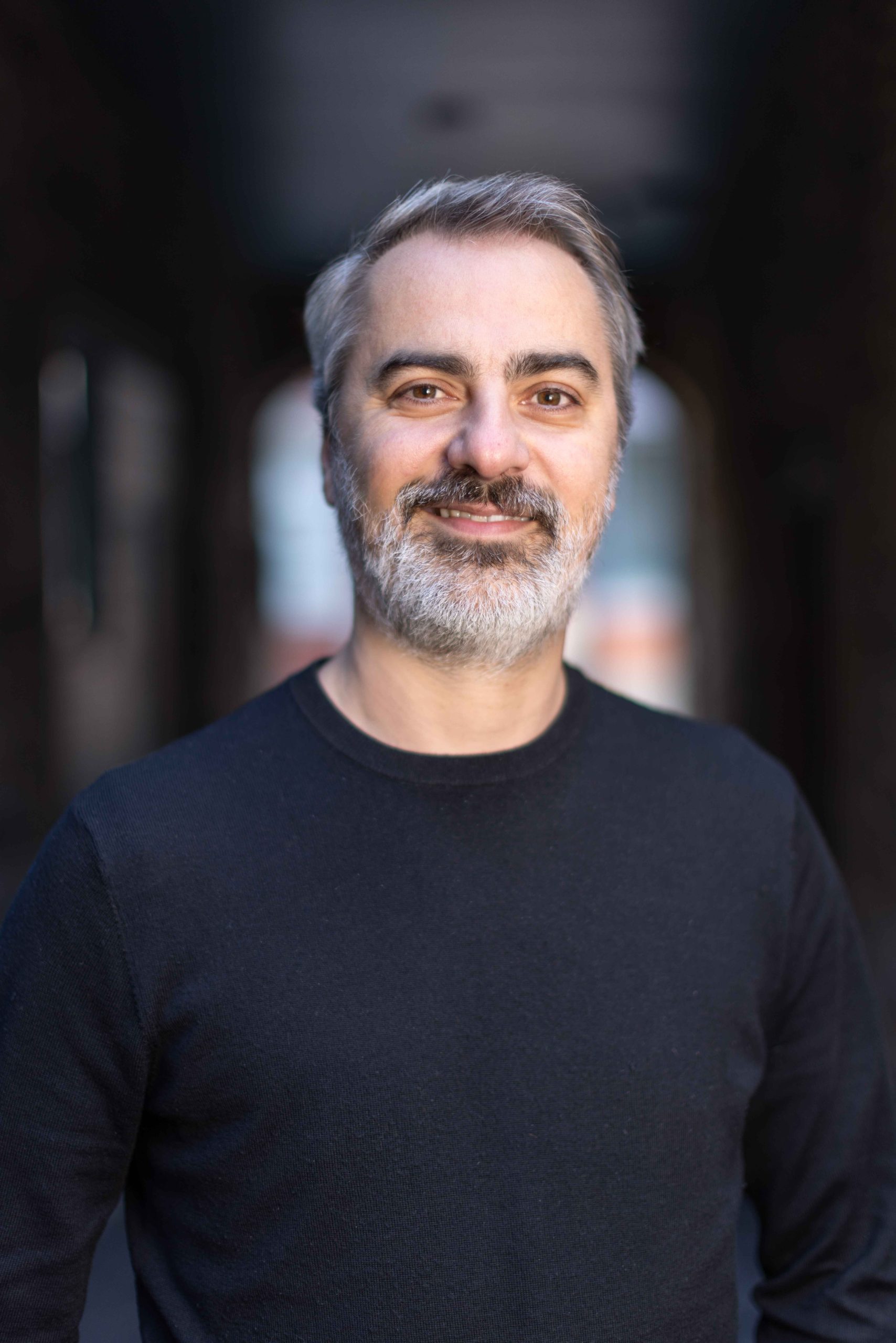
VFX Supervisor Julien Héry’s work includes HBO’s series Dune: Prophecy, Netflix’s biggest hit Stranger Things seasons 4 and 5, Marvel’s Guardians of the Galaxy Volume 3, superhero fan favorite WandaVision, and the critically acclaimed film The Aeronauts. Joining the Rodeo FX team in September 2015, he contributed to several projects, including Aquaman, Star Trek Beyond, the award-winning Game of Thrones Season 6, Deadpool, Miss Peregrine’s Home for Peculiar Kids, and Downsizing.
You’ll also find his expertise on many projects with renowned director Michel Gondry, highly creative collaborations that pushed the envelope in creative storytelling. He’s also contributed to music videos for Jay-Z, Lenny Kravitz, Metronomy and Chemical Brothers.