Image credit: Images courtesy of LAIKA
LAIKA’s “Wildwood” is the studio’s most ambitious film to date. It’s a stop-motion fantasy set in a miniature version of Portland, Oregon, with more puppets and environments than any LAIKA feature before it, creatures with fur and feathers, and a nearly 12-minute battle sequence. Building it took new fabrication methods, new motion control, and a digital pipeline built on USD to support more than 1,000 artists. We spoke with Jeff Stringer, LAIKA’s chief technology officer, and Jonathan Gerber, director of pipeline at LAIKA, about how the team balanced handcrafted artistry with cutting-edge technology, what it meant to bring Portland to life, and why sharing that work with the computer graphics community matters.
SIGGRAPH: “Wildwood” has been described as LAIKA’s most ambitious film yet. From a technology standpoint, what made this story different from your previous features?
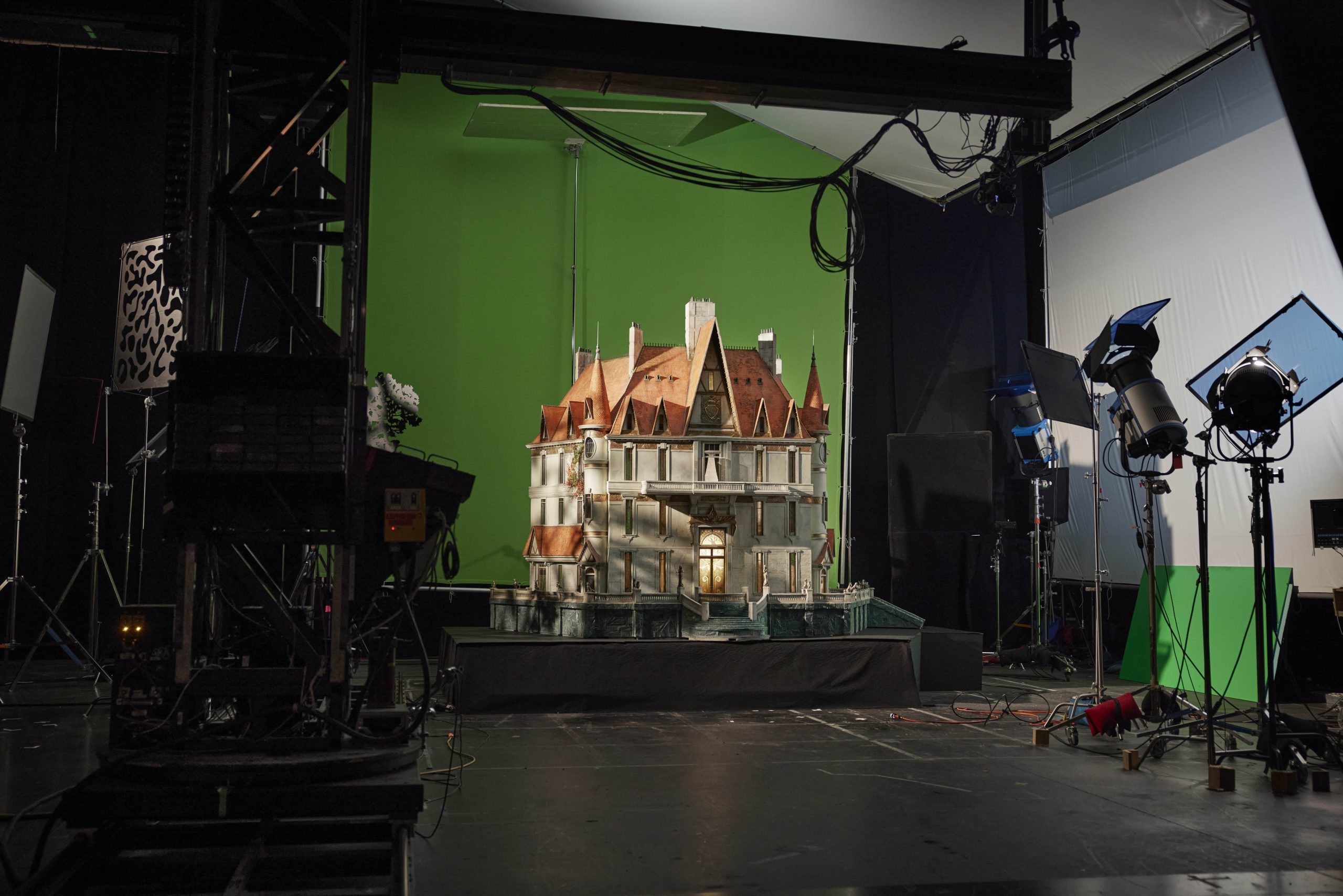
Jeff Stringer (JS): We’ve been building our capabilities and pushing the boundaries of what’s possible in stop motion with each project, but “Wildwood” was a giant leap forward. There was the enormous scale of it — with more individual puppets and unique environments than any film we’ve made before, but we were also creating a world with more realism, grounded in a real place, with creatures with fur and feathers and a nearly 12-minute battle sequence full of fire and explosions. This film required innovations and new technology in every department. We developed new fabrication methods, new motion control and animation rigging, and we also introduced an entirely new digital pipeline to support creating a film at this scale.
Jonathan Gerber (JG): The magnitude of the work required us to build more sophisticated tooling for asset management, scene assembly, tracking, and validation. Furthermore, this was our first project utilizing USD, and that in itself was quite a journey, as we took a sort of maximalist stance on adoption, forcing us to contend with (at the time) very uneven support across our stable of DCCs, as well as our own knowledge gaps.
JS: Another technical aspect that doesn’t get covered much is the significant expansion of our core IT infrastructure required to support the 1,000+ artists who worked on the film. This film required more of everything, more storage, more render farm, more locations, and more engineers to scale up all the services while in production.
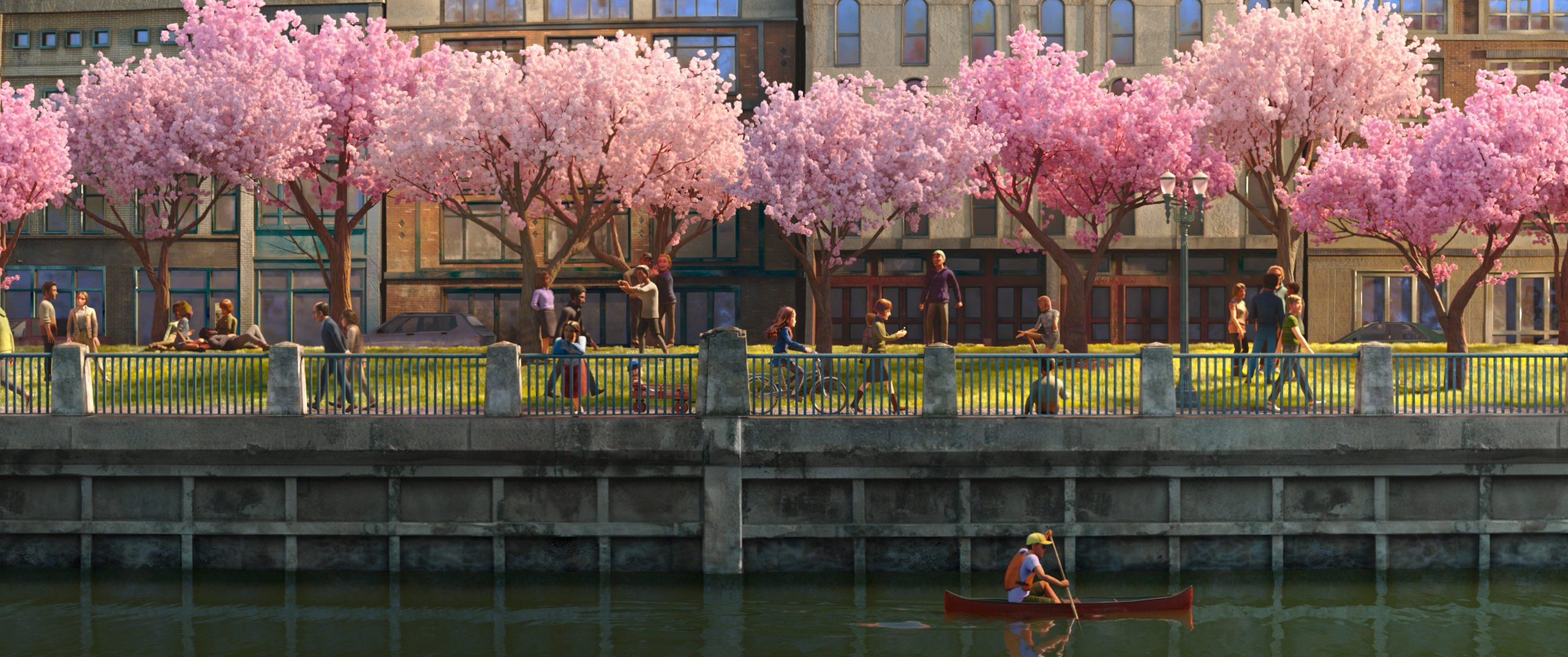
Image credit: Images courtesy of LAIKA
SIGGRAPH: The film is rooted in the Pacific Northwest and has been called a love letter to Portland. How did that sense of place shape the technical and visual choices you made in building this world?
JS: This was one of the most satisfying parts of working on “Wildwood”. We were building a miniature version of Portland and many of the locations around town that we all know and love. Our production designer, Nelson Lowry, was able to gather references and inspiration walking in his own neighborhood. He and Travis Knight, the film’s director and LAIKA’s president and CEO, emphasized what is quirky and odd about Portland but also the natural beauty that is around us every day.
Nelson’s approach to creating a realistic woodland world that felt comfortable and organized drove the technical processes for fabrication and digital teams. He built a shape language that could be repeated for the trees, leaves, rocks, and ivy. Digital asset teams worked from that library and from scans and textures created in fabrication. The result was some of the most expansive environments we have ever created, and that felt amazingly consistent.
JG: The fact that we were telling a story in and about our own backyard probably increased both the stakes and pressure for all of us; we wanted to convey to the audience some of what makes this such a breathtakingly beautiful place to live. And the digital teams wanted to try and capture the essence of what our co-workers achieved practically, which was truly astounding. Those factors really drove our focus on environments both in terms of creative tooling, structure, and efficiencies.
SIGGRAPH: LAIKA has been known to blend stop-motion with CG and 3D printing. What new tools or pipeline advances did the team develop for “Wildwood” that audiences wouldn’t have seen in earlier films?
JS: We made some significant advances in the tools and pipeline for digital asset acquisition for “Wildwood”. We have always used 3D scanning and photogrammetry to create accurate CG twins for puppets and environments, but to build the worlds of “Wildwood” we needed digital versions of almost everything fabricated, and we needed it ready to render without passing through a digital asset team, if possible. The fabricators were developing new materials for feathers and textiles and new resins for 3D prints that had to be perfectly reproduced digitally, and we had to do it at scale. The VFX asset team under Eric Wachtman developed a suite of new techniques for capturing the physical elements and all their properties and delivering renderable assets with minimal repainting and modeling. Todd Harvey and Ben Gilbert presented the system and pipeline at last year’s SIGGRAPH in a talk called “On-set Image-Based Asset Acquisition at LAIKA.”
I think audiences can see the impact of these advances in the visual consistency of “Wildwood”.
JG: We have two main CG departments — Rapid and VFX. The former focuses on facial performance that results in 3D-printed faces, and the latter focuses on traditional rendered output. For the realism needed in “Wildwood’s” facial performances, we found ourselves needing to incorporate more sophisticated facial setups from Rapid into our VFX rigs, and so we developed better integration and handoff between the two departments.
SIGGRAPH: The film includes many fantastical creatures. Can you walk us through how the team brought those characters to life, and where hand-built craft ends and digital tools begin?
JS: What may be surprising is that the workflow doesn’t just flow one way from hand built to digital. More and more, our creative teams move both ways and sometimes back again between digital and physical processes to create a final asset or performance. A good example is how we created the fur grooms for the coyotes in “Wildwood”. The fur started out as strips of laser cut or hand-cut fur materials meticulously placed on a maquette. Notes are addressed to the physical maquette until approved, and then to create the puppets and any variants or digital doubles at scale, a combination of processes is used.
For the coyotes, the approved maquette was scanned, and then we used a set of custom Houdini tools for CG grooming to create strips and strands that can be deformed and shaped for variants like wet and dry fur. Digital molds for these shapes are printed, and the fur strips are cast in silicone, which can be separated with xact-o knives to create animatable strands. The final painted puppet can then be scanned and photographed and optimized for use as a digital double. The use of digital grooming tools makes iterations faster, but creating molds and silicone casting and then scanning again to create the digital doubles ensures they share the same artifacts.
The use of digital tools in puppet fabrication really advanced during “Wildwood”. It was the first time we created physical molds from digital models and printed parts for the interior mechanics of the puppets. Our goal with the new pipeline is to elevate the role of our fabricators to establish the look and materials and then to scale the production of the assets and iterations with integrated digital steps. We are getting better at going back and forth between physical and digital.
SIGGRAPH: LAIKA has a long history of sharing its technical work with the computer graphics community. Why is it important to share creative innovations with the broader community through a venue like SIGGRAPH?
JS: It’s true we do really value the opportunity to share our work at SIGGRAPH. Our films tend to take a long time to make, and we want to make sure the community hears from us. In fact, all the innovations we mentioned here were presented at SIGGRAPH at some point during the making of “Wildwood”. Henry Brummelman shared our digital puppet fabrication process back in 2023; Micah Henry presented the CG-Assisted Fur Fabrication Pipeline in Vancouver; and just last year Todd and Ben presented the asset acquisition system. We hope to have more to share in Anaheim this year.
We also participate in the ASWF’s open-source events and Digipro. We get inspiration from the work at other studios, and we want to keep stop motion in the mix.
JG: We wouldn’t be able to be successful in what we do without the community of artists, researchers, computer scientists, and open-source advocates, who routinely share the fruits of their labor at SIGGRAPH. We feel it is important to contribute back to the community that has helped make what we do possible.
SIGGRAPH: Now that the film is out in the world, what do you hope students, early-career artists, and technologists in the SIGGRAPH community take away from the way LAIKA approaches the intersection of art and technology?
JS: I hope students and early career technologists will see our passion for both art and technology in the service of great films. It takes a lot of different skills and there are so many ways to contribute, and it’s a lot more fun to work with other people who know something you don’t.
JG: I hope that people come away from “Wildwood” with the belief that there are still opportunities to combine art and science in filmmaking and to tell unique and compelling stories with a distinct point of view.
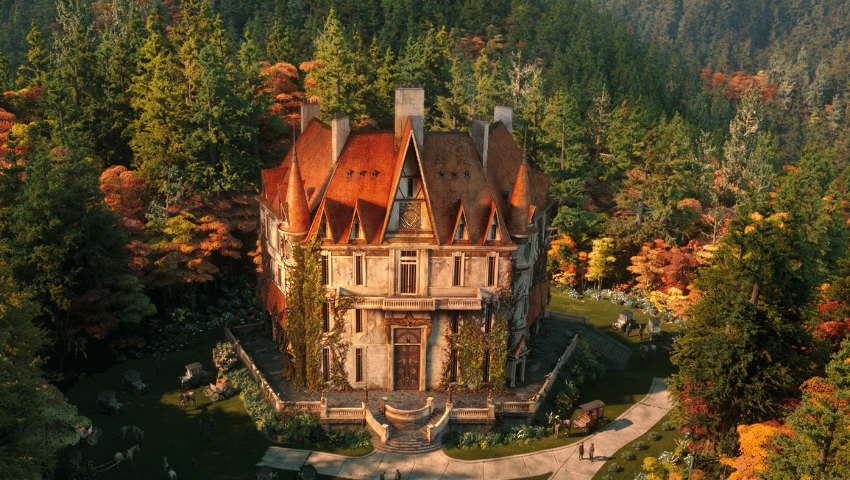
Image credit: Images courtesy of LAIKA
Inspired by LAIKA’s story? Share yours at SIGGRAPH 2027. Select submissions are now open for the conference, taking place 8-12 August 2027 at the Anaheim Convention Center. Whether you’re an artist, researcher, educator, or technologist, SIGGRAPH invites you to share the work shaping the future of creativity and technology. Upcoming deadlines include Art Papers (19 January 2027), the Art Gallery (2 February 2027), and Talks, Panels, Courses, Educator’s Forum, Real-Time Live!, Immersive Pavilion, and Emerging Technologies (23 February 2027). Look forward to more program submissions opening soon! Explore all programs and submit here.

Johnathan Gerber, the Director of Pipeline at LAIKA, leads a team of engineers in building the studio’s digital pipeline. Prior to joining LAIKA in 2021, Jonathan spent 18 years at Digital Domain, rising from technical director to Director of Technology. Before that, he spent eight years as Global Pipeline Supervisor, managing teams across multiple locations. His feature credits at Digital Domain include I, Robot, Aeon Flux, Transformers (Model & Texture Lead), Speed Racer (Pipeline & Tools Lead), and Tron: Legacy. Earlier in his career, he worked at Cinesite on films such as Deep Blue Sea, Spy Game, and Solaris, and at Walt Disney Feature Animation on Dinosaur, the studio’s first feature to blend CG characters with live-action plates.

Jeff Stringer, Chief Technology Officer at LAIKA, oversees all of technology for the organization. He has been a key collaborator at the studio since 2008 and has served as Director of Production Operations and Director of Production Technology before becoming LAIKA’s CTO in 2022. Prior to joining LAIKA, Jeff was the VP of Digital Studio at Digital Domain and oversaw production and technology operations on many blockbuster films including The Day After Tomorrow, I, Robot, The Golden Compass, Transformers and Pirates of the Caribbean. Jeff began his career in VFX and animation managing technical operations for Tippet Studio on its first CG VFX project, Starship Troopers.