Image Credit: CNESST, Cosette, Rodeo FX, See Creature
At SIGGRAPH 2025, the Computer Animation Festival showcased works that push the boundaries of storytelling through technology, craft, and animation. Among them, “Hanging By A Thread” by Dale Hayward and the See Creature team blends handmade stop-motion animation with digital effects to tell a deeply human story. Using yarn, puppets, and carefully layered compositing, the film captures the emotional unraveling of its characters, inviting viewers into a reflective, immersive experience that unfolds through observation and empathy.
SIGGRAPH: Tell us about CNESST – “Hanging By A Thread” in your own words. How did the piece evolve from concept to screen at the SIGGRAPH 2025 Computer Animation Festival?
Dale Hayward (DH): The script and art direction from the team (Jasmin and Zoe) at Cossette were so strong that we immediately knew this project was going to be special. It doesn’t happen very often that the medium is the message, so we knew that in order to fully realize this film, it was a non-negotiable that it was made with real yarn in stop motion. At the start of the 13-week production time, we took the script through a thorough animatic stage. We don’t like to rush past the animatic; this is where the edit actually happens, and it’s a great time for the client and agency to be involved.
Next, we work on the character and set design of which we’re always thinking in reality, so early on, we build physical mock-ups which lead us to our next stage, the Photomatic. It’s a phase that we’ve refined over the years that helps bridge the gap between drawings of a storyboard and reality (in stop motion). So before we go too far down the fabrication road, we bring our (in progress or cardboard stand-ins) puppets and sets into the studio for a day or two with the client and team leads. Then, according to the animatic, we take a frame or two of every scene with the actual camera and lenses and edit them immediately. It’s a fantastic opportunity to involve the client and producers into the film making process. They get to understand the limitations and advantages of shooting in stop motion and make decisions on the spot. This is the best time to try out some new ideas, because once you get under camera, new ideas arise, but you don’t want those during actual animation shooting.
Then, fabrication is finalized and animation testing begins, which in this project’s case was all about the unraveling of the main character. It was essential to keep the communication channels open constantly when it came to building the puppets so the crochet artists could create a puppet that looked good, but was also capable of acting. This helped Laura Venditti, Sylvie Trouvé, and myself tremendously when we got into the animation phase. Before moving on to the next shot, we combine the elements together in a quick precomp of the shot and drop the shot into offline edit. We do this throughout the animation stage because we need to ensure that we’ve covered all the needs of the shot before moving on.
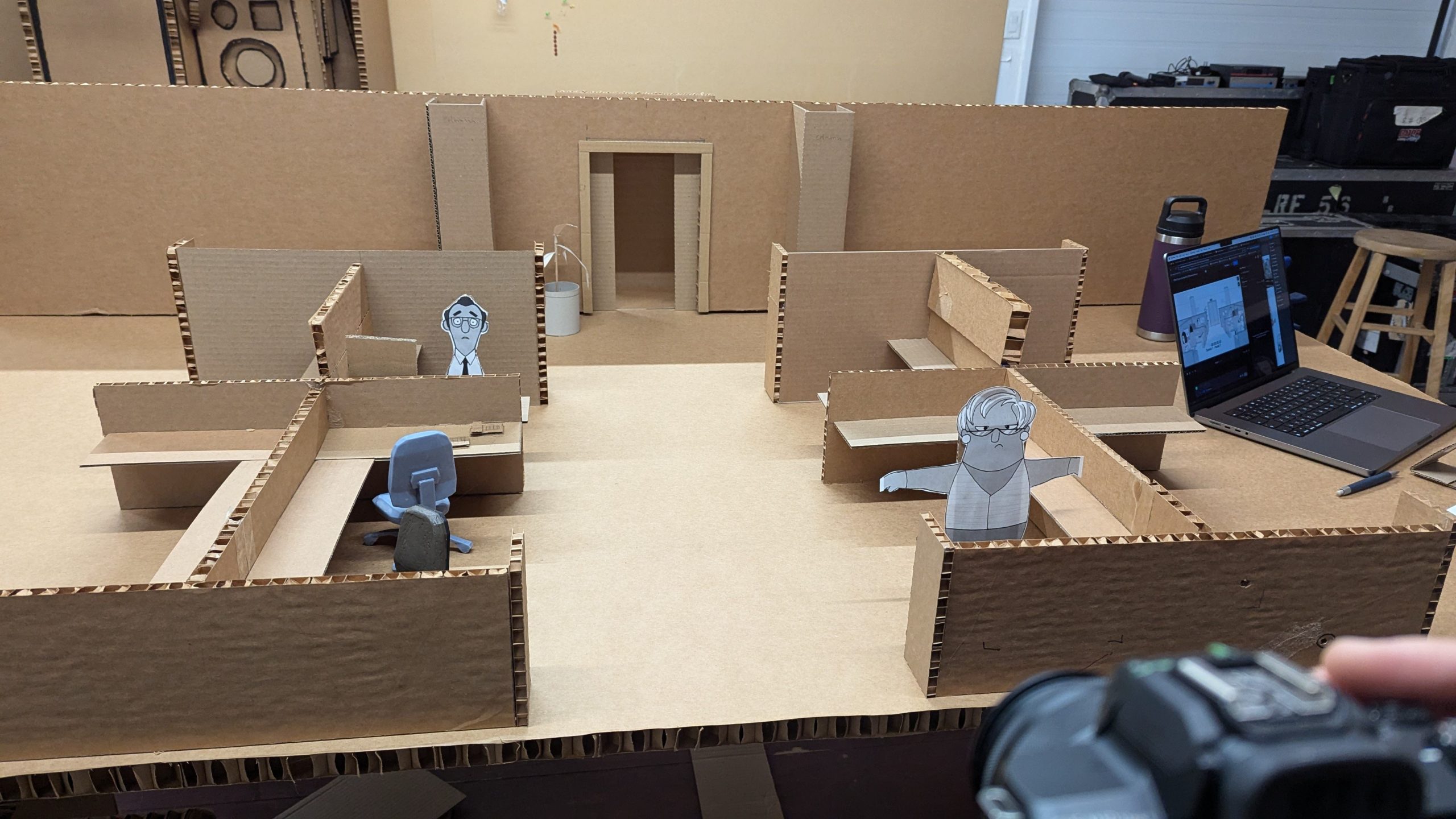
Image Credit: Dale Hayward, See Creature
SIGGRAPH: What do you hope audiences took away from viewing “Hanging By A Thread” in the Electronic Theater setting?
DH: The feedback we’ve heard is how touched people have been over this film, even bringing people to tears! To make the audience feel that way in under 60 seconds is really why we tell stories in this way. It also shows the power of using real material to tell a human story. Especially in this current era, we need them more than ever.
I hope it helps people relate and reflect on situations where this has happened to them, to recognize the signs of it, and to do something about it. We’re all fighting our own battles, and bullying is not just in the school playground; it can be all around us if we don’t stick up for each other.
SIGGRAPH: What was the process like for combining handmade stop-motion animation with digital effects?
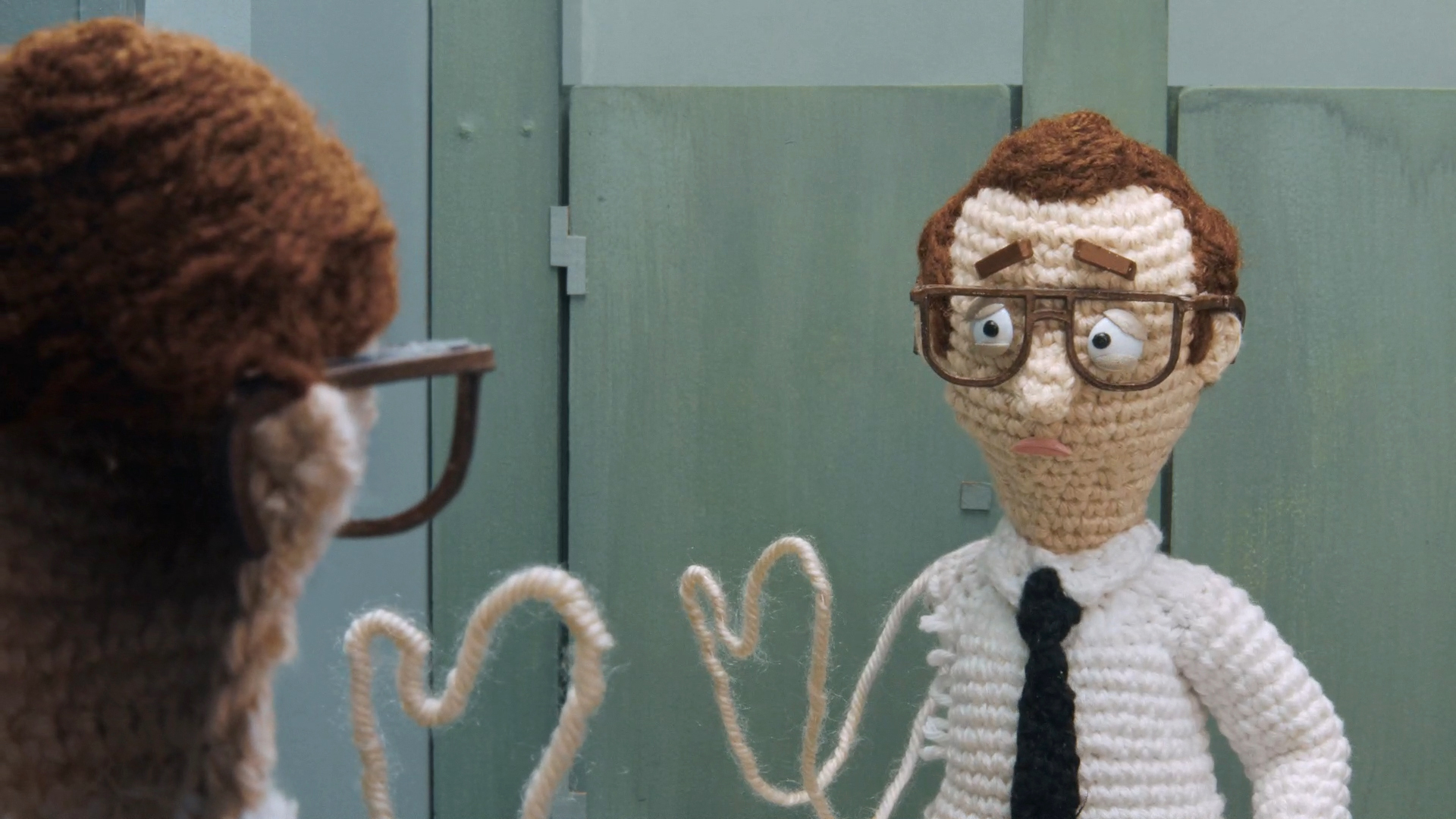
DH: The unraveling of the character (Harold) was always the paramount challenge of the project because as the story progresses, so does Harold’s unraveling. We strategically chose how to achieve it through a mix of traditional VFX and some movie magic. One of the huge advantages of working with Rodeo Production is that right next door is a world-class VFX studio, Rodeo FX. So early on, the VFX Supervisor Eric Gagnon and I were in conversation about what stop-motion elements were needed to help his team achieve the shots quickly and how we could shape ideas to accommodate. For example, an early conversation was how do we have an unraveling, hollow puppet walk without an internal armature? The answer is: We don’t. The Harold puppet never actually unravels, just elements did.
For a shot like the unraveling from behind, we first shot the character clean. Then, we shot a separate animation of the movement matched with a crochet shell that was held up with a rig. This layer had a strategically placed section of crochet that needed to be unraveled. Then, the layers were composited together with ceiling plates.
For the bathroom mirror shot, it was important to see the hollow head of Harold from behind, and when we were boarding it, the scene from “Terminator 2” came to mind where they used Linda Hamilton’s twin and a prosthetic of Arnold on one side of the “mirror” with Linda and Arnold on the other side. I always loved that trick to avoid seeing the camera in the reflection, so we did the same. The “reflection” is the full puppet with his arm wrapped around his back and a wired thread hand was added and the other side was the hollow shell without an armature. Sylvie then animated both sides of the puppet in unison to help sell the reflection.

Image Credit: Dale Hayward, See Creature
SIGGRAPH: What advice would you give to animators who want to try mixing stop-motion with digital compositing?
DH: Involve the compositing team as early as possible, in the animatic stage hopefully, but definitely in animation production. Capturing the right image can make compositing so much easier and the results are much better.
Plates are so important; capture as many clean or reference plates as you can.
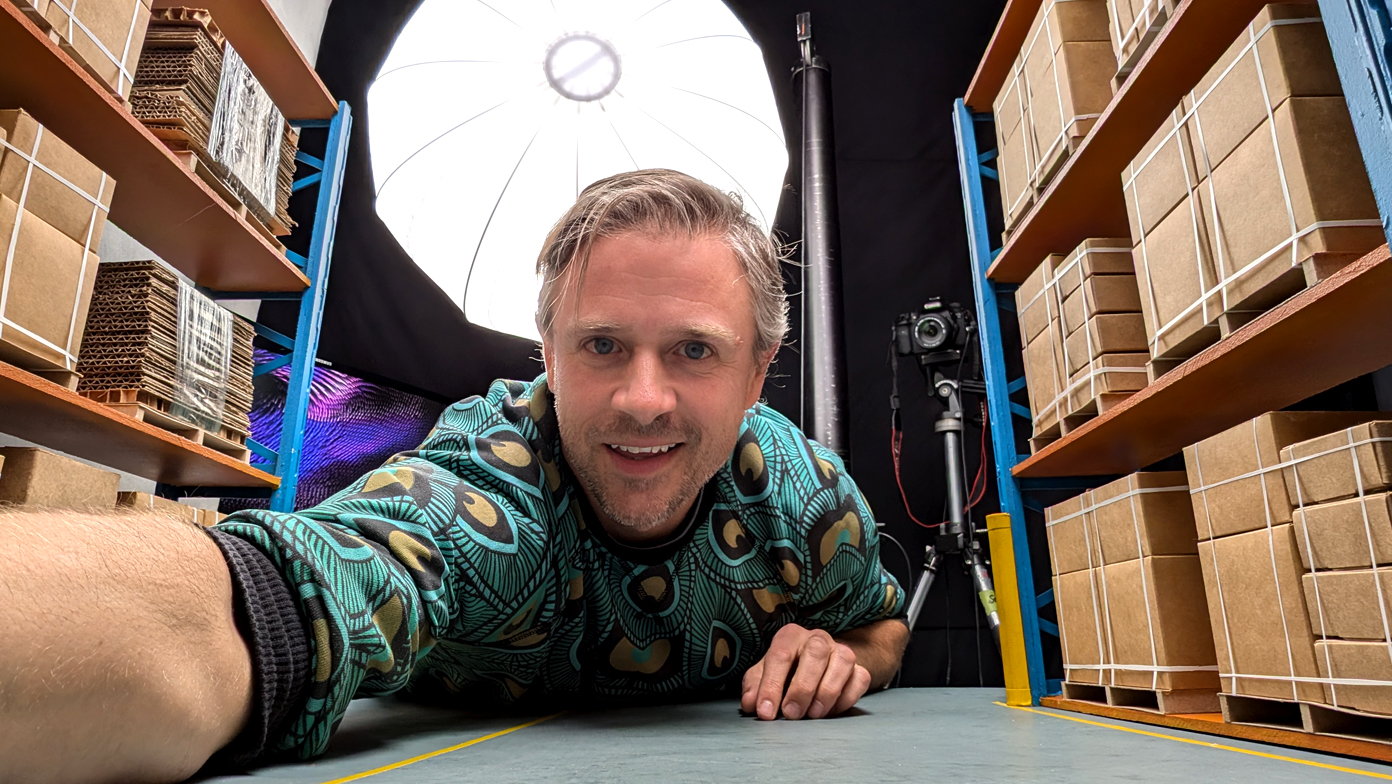
And utilize the power of exposures with Dragonframe. We can capture the same animated frame in multiple camera settings, depth of field, or lighting settings and then use those frames in the comp. For example, we use a technique called Frontlight / Backlight to almost eliminate green screens out of our pipeline. It’s where you have your camera above an object on a diffused glass surface lit the way you like. This the first exposure. Then, with or without DMX capable lights, the main lights turn off, the light under glass turns on, and we capture a second exposure. This captures the object as a black silhouette on a white background. We then use that layer as a luma matte and remove the background from the first exposure. No green screen spill and no color readjustment, it’s a great technique that’s pretty unique to stop motion.
Here’s a video explaining the technique:
Here’s a behind-the-scenes edit video:
SIGGRAPH: What challenges did you face animating the threads to look natural while keeping the character’s movements consistent?
DH: Using ball-and-socket armatures rather than aluminum wire made a huge difference in getting the subtleties of the body language. It was a lot of fun, posing out the characters in the work environments. We made sure to design and pose them in a way to make them all feel at home in the most boring office possible.
But we did use wire for when he’s down to just a single line, so finding the right thickness of yarn but wrapped around the wire took a few tries to get right.
We learned that when you pull the thread out of a tight crochet like this, it takes a lot of pulling to see a real difference on camera, so we had to exaggerate the amount of thread that was actually pulled out.
Stop motion is always full of challenges at whatever aspect. I find expecting the unexpected makes my life so much easier to handle.

Image Credit: Dale Hayward, See Creature
SIGGRAPH: What advice would you give to others submitting work to the Computer Animation Festival?
DH: I was actually pleasantly surprised that it was accepted, being that it’s stop motion, but stop motion wouldn’t be possible in this day without technology, whether it’s the DMX, camera, compositing, or the 3D printing of the furniture. The tools of tech allow us to bring so much more to life. So don’t be afraid to submit your project!
Inspired by projects like “Hanging By A Thread?” Creators are encouraged to submit their work to the SIGGRAPH 2026 Computer Animation Festival. Join a global community exploring new forms of storytelling, pushing the boundaries of animation, VFX, and digital artistry.
Dale Hayward is a director, public speaker, and CEO of See Creature Animation and See Learn Academy. When he’s not collaborating with brands like Nike and Hot Wheels or working on projects like Netflix’s “The Little Prince” or “Kiri and Lou,” he’s celebrating wins like the Grand Prize at the Idéa concours for CNESST’s “Hanging by a Thread” — or finding some strange thing to animate with his wife and co-creator, Sylvie Trouvé.