Image credit: Shunsuke Hirata
Congratulations to the SIGGRAPH 2025 Student Research Competition winners! Yu Suzuki (first place, undergraduate), Hidehito Ohba (second place, undergraduate), James Edralin (third place, undergraduate), Shunsuke Hirata (first place, graduate), Nathan King (second place, graduate), and Haruki Kato (third place, graduate) impressed the community with their creativity and innovation in computer graphics and interactive techniques. After the conference, SIGGRAPH was excited to chat with some of these rising stars about their projects and inspirations.
SIGGRAPH: Congratulations on your win at the SIGGRAPH 2025 Student Research Competition! Can you walk us through the spark that first set your project in motion?
James Edralin (JE): Thank you! The project began as a collaboration with faculty in UBC’s SASS program to build a VR tool that could study spatial sound localization in environments that feel more realistic than lab booths or isolated HRTF tests. At first, it was a pretty straightforward brief: An environment, spawn sounds in different locations, and measure how people point to them.
As development progressed, the limitations of a single static scene became obvious and made researchers want to run many conditions quickly and reproduce the same scene across participants. That realization led us to develop the prototype into a modular system which includes deterministic trial generation and experiment configurations. That change transformed the project from a one-off demo into a usable system researchers can configure and run repeatedly.
Nathan King (NK): In computer graphics, partial differential equations (PDEs) are usually solved with the finite element method (FEM), which relies on meshes. But building meshes is often difficult, computationally expensive, and poorly shaped elements can cause stability issues for FEM. Earlier work on the closest point method (CPM) showed that it could avoid these limitations by only requiring closest-point queries, eliminating the need for a mesh altogether and making it flexible across different shape representations.
The drawback was that CPM had only been implemented with uniform grids. This is similar to requiring a mesh to use elements of the same size everywhere, regardless of how simple or complex the geometry is. Very fine resolution would be needed throughout the entire domain just to capture detail in the most complex regions, which greatly increases computational cost. Realizing that adaptive grids could overcome this inefficiency was the spark that set my project in motion. By concentrating high resolution only where it is needed, adaptivity can improve efficiency to make CPM a compelling alternative to FEM.
Shunsuke Hirata (SH): The initial inspiration for my project came from an Asian dragonfly balancing toy made of wood. Its body and wings were meticulously designed to achieve a perfect center of mass. This toy could balance on any surface just by its mouth, and no matter how much force I applied, it wouldn’t fall. I was fascinated by this toy’s ability to stand on a single point and never topple over. Classic balancing toys often have weights at the bottom or a boring symmetrical shape. I thought it would be interesting to design a balancing toy using a user’s favorite 3D model.
SIGGRAPH: Every research journey has hurdles. What was the biggest turning point or unexpected discovery you encountered along the way?
JE: The main turning point was when we decided to move from a single-demo approach to engineering a generator system. That meant adopting a procedural generation framework that let us treat environment complexity as a controllable experimental variable (e.g., a scalar mapping of spawn densities and assembly placements). That change required more engineering work than we first expected, but it was important as it converted noisy, one-off pilot runs into reproducible data and enabled systematic comparisons across conditions.
NK: At first, we tried using a scattered-data interpolant to connect the different resolution regions of the adaptive grid. An undergraduate assistant explored this direction, but it never fully materialized. The breakthrough came when I realized we could instead modify the closest-point extension step of CPM to handle the coupling. This allowed us to use standard gridded-data interpolation, which made development faster, easier, and more robust — while also letting us reuse much of our existing code.
SH: A significant turning point, and a stroke of bad luck for me, was when all of my co-authors except for my advisor moved to new positions. In the latter half of the project, I was unable to discuss the research with my co-authors easily and had to continue working on the project independently.
SIGGRAPH: Beyond your winning project, what corners of computer graphics or interactive techniques are you most excited to dive deeper into next?
JE: While the poster focuses on use cases of building virtual-world training simulations, I’m equally as interested by advances in real-time rendering that make those simulations more believable and effective. My interests include physically based rendering for real-time engines, render-pipeline development and optimizations which balances fidelity and latency, and geometry/LOD techniques for scaling visual qualities.
NK: I am especially excited about neural shape representations, CAD modelling, physics-based shape optimization, and 3D generative AI. I believe these areas have the potential to reshape how we design and interact with digital objects.
SH: In the field of interaction research, I am interested in applications that can enhance the donation experience and promote altruistic donation behavior. I’m exploring how donations could be used to expand a sense of community.
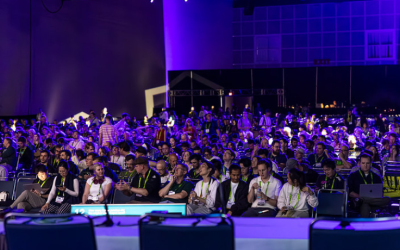
SIGGRAPH: Presenting in Vancouver this year came with a vibrant community and global stage. What moment from the conference stands out as the most memorable for you?
JE: The poster conversations were the highlight. I wasn’t at every session myself since I was also a Student Volunteer, but my teammates for the poster ran head-mounted demos and reported back that attendees had tried it and gave very practical feedback. I also enjoyed the engagement with professionals around the conference as we shared and discussed our ideas, experiences, and insights.
NK: The most memorable moment for me was attending Ed Catmull’s talk about his experience making “Toy Story”. That film was a formative part of my childhood, and it was surreal to hear directly from one of its creators. Learning about the challenges they faced was both humbling and motivating. It reminded me that major difficulties are a universal experience, and that perseverance is key. The fact that I did not realize until only a few years ago that “Toy Story” was the first fully computer-generated movie is a testament to how well they executed it.
SH: The most memorable moment was the interactive session immediately following the Technical Papers talks. It was incredibly meaningful for me to be able to ask questions and have discussions with the authors face to face, similar to a poster session.
SIGGRAPH: Winning is just one milestone. What new directions, collaborations, or ambitions are you hoping to pursue as you continue shaping your path in research and beyond?
JE: Next steps in the research are more practical. Conducting more experiments for the application to run larger-scale evaluations, as well as streamlining calibration phases and data handling to make it more accessible without heavy technical overhead. On the technical side, I plan to keep exploring interaction improvements and exposing external interfaces where users can easily plug in custom stimuli parameters and pipelines.
As for my career path, I plan to grow as a researcher and developer. I’m considering research roles or graduate school where I can deepen the work on VR and explore more on real-time rendering and interaction techniques.
NK: Much of my work so far has focused on PDE-based geometry processing with general shape representations. I am excited to broaden this to other algorithms and applications for general representations. As a hobbyist woodworker, I would also love to collaborate on projects that involve fabrication and architecture to bring the virtual into the physical world.
SH: My goal is to contribute to fostering social connections between people by encouraging altruistic behavior. It’s a challenging task, but I want to start with small, manageable steps. In my research, I’m exploring the theme of creating better donation experiences with the aim of expanding a sense of community.
Congratulations to this year’s winners! Look forward to more research and advancements presented at SIGGRAPH 2026 in Los Angeles. Submissions open in late 2025.
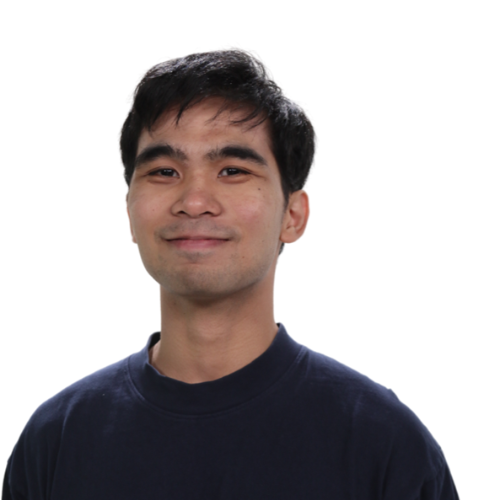
Delsther James Edralin is a 4th year Computer Science student at the University of British Columbia with a prior degree in Architecture. At Emerging Media Lab, he develops VR simulations and experiment pipelines that support reproducible perceptual studies. His interests lie at the intersection of interaction design, procedural content generation, and real-time physically based rendering to make simulations more believable and immersive.
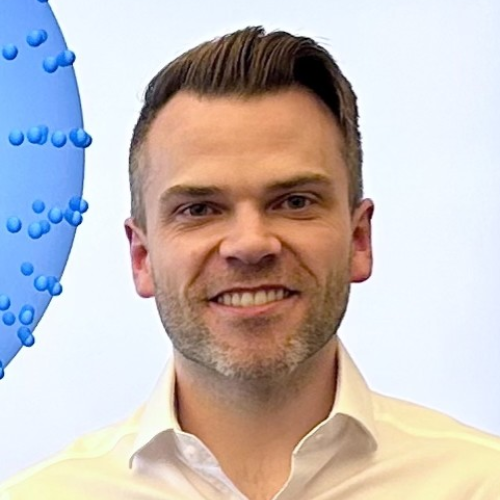
Nathan King recently completed his PhD in computer graphics at the University of Waterloo and has joined Shapr3D as a Research Scientist, focusing on CAD modelling, physics-based simulation, and geometry processing. He holds a BSc in Applied Mathematics and Physics from Memorial University and an MSc in Applied and Computational Mathematics from Simon Fraser University. Before his PhD, he worked as a Research Scientist developing computer vision algorithms for marine radar at Rutter. His graduate work has been recognized with numerous awards, including the NSERC Canadian Graduate Scholarship and Postgraduate Scholarship, as well as the Ontario Graduate Scholarship and the QEII Graduate Scholarship in Science and Technology (twice).

Shunsuke Hirata is currently pursuing a Master of Engineering degree at the University of Tokyo, under the supervision of Professor Yoshihiro Kawahara. He received his Bachelor of Engineering degree from the University of Tokyo in 2023. His research interests focus on the optimization of shape and mass distribution for free-form balancing toys, with applications in design and manufacturing.